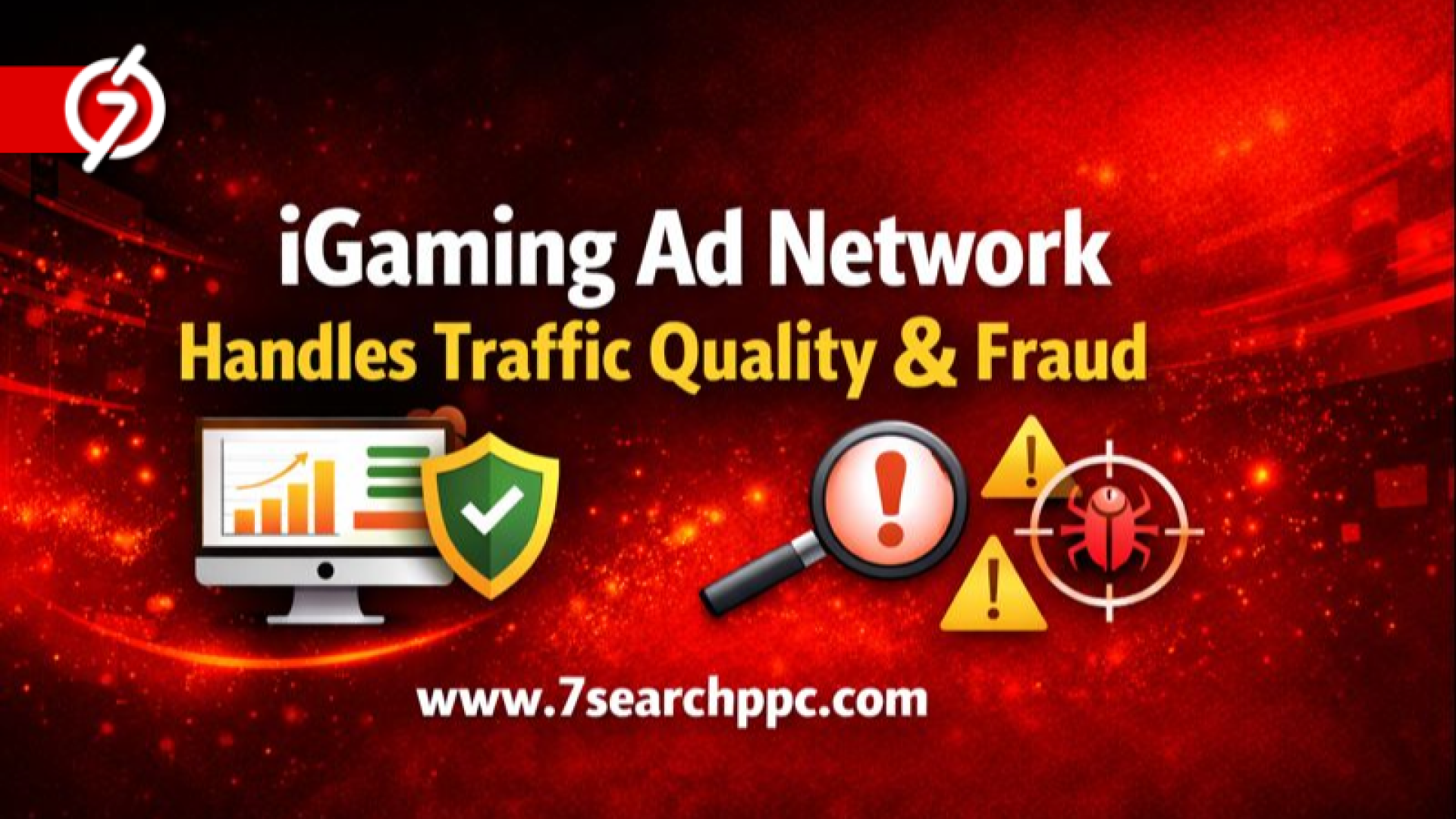
How iGaming Ad Network Handles Traffic Quality & Fraud
Here's something most advertisers won't tell you: nearly 40% of iGaming ad budgets disappear into fraudulent clicks, bot traffic, and placements that never had a real user behind them. The industry grows faster than regulators can track, which makes it a goldmine for scammers and a minefield for legitimate advertisers. If you've ever launched a campaign that burned through budget with zero conversions, you weren't imagining things—you were likely feeding bots, not bettors.
The iGaming Ad Network landscape has matured significantly, but with that maturity comes sophisticated fraud. Understanding how quality networks handle traffic verification isn't just nice to know anymore—it's the difference between profit and loss.
Register & Launch iGaming Ad Campaign Now!
The Advertiser's Nightmare
Picture this: You've just launched what should be a winning campaign. Your creatives are sharp, your offer converts well organically, and you've allocated a serious budget. Three days in, you're seeing thousands of clicks but your registration page might as well be a ghost town. Your cost-per-acquisition is through the roof, and you're left wondering whether the problem is your offer, your targeting, or something darker.
This scenario plays out daily across the iGaming Advertising Network ecosystem. Advertisers face a brutal reality: fraud operators have become incredibly sophisticated. They don't just send obvious bot traffic anymore. They've evolved to mimic real user behavior—scrolling, hovering, even generating fake engagement metrics that look legitimate on surface-level analytics. For advertisers in gambling, sports betting, and casino verticals, where user lifetime value is high but acquisition costs are equally steep, even a 20% fraud rate can completely destroy unit economics.
The worst part? Many advertisers don't even realize they're being defrauded until they've burned through significant budgets. By the time they notice the red flags—impossible click-through rates, conversions that never materialize, or traffic from locations that don't match their targeting—the damage is done.
What Quality Networks Actually Do
Here's what separates professional iGaming Ad Platform operators from the rest: they treat fraud prevention as an ongoing war, not a one-time checkbox. The best networks don't just react to fraud—they predict and prevent it through layered verification systems.
First, there's device fingerprinting. Every device leaves a unique digital signature based on browser version, screen resolution, installed fonts, timezone, and dozens of other parameters. Fraudsters can fake IP addresses easily, but replicating an entire device fingerprint consistently? That's exponentially harder. Quality networks build databases of known fraud signatures and flag suspicious patterns instantly.
Then comes behavioral analysis. Real users don't behave like bots. They hesitate, they backtrack, they spend uneven amounts of time on pages. Advanced iGaming Traffic monitoring systems track micro-behaviors—mouse movements, scroll patterns, touch gestures on mobile—and compare them against baseline human behavior models. When traffic looks too perfect or too consistent, it gets flagged.
Geographic and temporal analysis adds another layer. If your campaign targeting UK bettors suddenly receives a surge of clicks from a data center in Eastern Europe at 3 AM local time, that's not a coincidence. Smart networks cross-reference IP locations with user timezone settings, language preferences, and historical data to spot inconsistencies.
Pre-bid filtering is where the magic really happens. Instead of letting suspicious traffic through and refunding later, cutting-edge networks evaluate traffic quality before the impression even serves. They maintain real-time blacklists of fraudulent publishers, suspicious IP ranges, and known bot networks. This proactive approach means your budget never touches fraudulent inventory in the first place.
Understanding the Fraud Ecosystem
To fight fraud effectively, you need to understand how it operates. The fraud ecosystem in iGaming exists because the incentives are so strong. Here's the uncomfortable truth: some publishers actively participate in fraud, while others unknowingly host it through compromised ad tags or resold inventory.
Click farms still exist, but they're the amateur hour of fraud. The real threat comes from sophisticated bot networks that rotate IP addresses, mimic human behavior patterns, and even solve basic CAPTCHAs. These operations are often run by organized groups with significant technical resources.
Then there's domain spoofing, where fraudsters make low-quality traffic appear to come from premium publishers. Your campaign thinks it's running on a top-tier gambling news site, but it's actually being shown on a network of auto-refreshing tabs hidden in the background of unwitting users' browsers.
The challenge intensifies with igaming PPC campaigns because the cost-per-click is higher than most verticals. Every fraudulent click represents a bigger loss, which makes iGaming an attractive target for fraud operations.
How Smart Networks Combat Sophisticated Fraud
The best iGaming Ad Campaign platforms employ machine learning models trained on millions of data points to distinguish legitimate traffic from fraud. These systems don't rely on static rules—they evolve as fraud tactics evolve.
Conversion tracking integration is crucial. By monitoring not just clicks but downstream actions—account registrations, deposits, actual gameplay—networks can work backward to identify which traffic sources consistently deliver value versus which ones deliver empty clicks. Publishers that repeatedly send traffic that doesn't convert get downgraded or removed entirely.
Honeypot techniques are surprisingly effective. Networks intentionally create ad placements that should never receive legitimate traffic—they're invisible to real users but visible to automated scrapers and bots. Any traffic that hits these honeypots immediately identifies the source as fraudulent.
Collusion detection prevents another common fraud type: publishers clicking their own ads or organizing click exchanges with other publishers. By analyzing traffic patterns across their entire network, quality platforms can spot when publishers send suspiciously high volumes of traffic to each other's campaigns.
The Role of Transparency in Traffic Quality
Here's something advertisers don't demand enough: transparency. The best networks provide granular reporting that goes beyond surface metrics. You should be able to see not just impressions and clicks, but traffic sources, device types, conversion paths, and quality scores for each segment.
When evaluating iGaming Push Ads or any other format, ask your network what percentage of traffic gets filtered pre-bid versus post-click. Ask about their refund policies for proven fraud. Ask to see case studies showing how they've identified and eliminated fraud for other advertisers.
Networks that resist these questions probably have something to hide. Those that embrace transparency often maintain public fraud detection rate statistics and openly discuss their methodologies.
Smarter Approaches to Campaign Safety
The reality is that no network can guarantee 100% fraud-free traffic—fraud operators are too clever and too persistent. But the gap between networks is enormous. Choosing a platform that prioritizes quality over volume means accepting fewer impressions at higher CPMs, but dramatically better ROI.
Look for networks that offer traffic quality tiers. Not all inventory is created equal, and some sources will always be riskier than others. The ability to choose premium-verified traffic for your most important campaigns while testing broader inventory for audience discovery gives you control over the quality-versus-scale tradeoff.
Consider networks that share economic risk with you. Some platforms now offer performance-based pricing models where you only pay for traffic that meets specific quality thresholds—whether that's time on site, page depth, or completed registration. When the network's revenue depends on delivering quality, their incentives align with yours.
Implementing your own secondary verification through third-party fraud detection tools adds another safety layer. Yes, it's an additional cost, but for high-stakes campaigns, having an independent audit of traffic quality provides peace of mind and often catches fraud that slipped through the network's filters.
Taking Control of Your Campaign Quality
The best practices for exploring the best igaming ads strategies emphasize that fraud prevention starts with you. Set realistic expectations based on industry benchmarks—if someone promises you iGaming traffic at half the market rate with twice the conversion rate, you're probably looking at fraud.
Monitor your campaigns obsessively in the first 48 hours. Fraud often shows up immediately with suspiciously high engagement that doesn't translate to conversions. The longer fraudulent traffic runs, the more budget it wastes.
Work with networks that provide real-time campaign controls. The ability to pause sources that underperform or show fraud indicators without waiting for support tickets can save thousands in wasted spend.
When you're ready to scale after testing, diversify your traffic sources. Relying on a single network or publisher creates vulnerability. Spreading budget across multiple verified sources reduces the impact of any single fraud incident.
The Future of Traffic Quality Management
The fraud detection arms race will never end, but the tools are getting better. Blockchain-based ad verification, though still nascent, promises immutable records of ad delivery and engagement. AI models are becoming sophisticated enough to detect fraud patterns that humans would miss.
Regulatory pressure is increasing too. As more jurisdictions legalize and regulate iGaming, they're imposing stricter requirements on advertising practices, which indirectly forces networks to maintain higher quality standards or risk license issues.
For advertisers focused on techniques to buy iGaming Traffic effectively, the key is partnering with networks that view fraud prevention as a competitive advantage rather than a cost center. These platforms invest heavily in detection technology because they know their long-term success depends on advertiser trust.
Ready to Launch with Confidence?
Traffic quality isn't just about avoiding fraud—it's about ensuring every dollar of your ad budget reaches real potential customers who might actually convert. The difference between a failing campaign and a profitable one often comes down to traffic quality, not creative or offer strength.
If you're tired of wondering whether your clicks are real, it's time to launch your igaming advertising Campaign on a platform that treats your budget with the respect it deserves. Quality networks don't just promise verification—they provide detailed proof of it.
Closing Thoughts
Look, I get it. This whole fraud thing sounds exhausting, and you might be wondering if it's even worth running paid campaigns in iGaming when the landscape feels this risky. But here's the thing—the advertisers who figure out traffic quality early are the ones dominating their niches. They're not smarter or luckier; they just stopped accepting fraud as a cost of doing business.
The networks worth your time don't just filter out the obvious junk. They obsess over traffic quality the same way you obsess over your conversion rates. Finding the right igaming advertising platform isn't about choosing the cheapest option or the one with the slickest sales pitch—it's about partnering with a network that genuinely aligns with your success because when your campaigns work, they make money. When your campaigns get defrauded, they lose a client.
So before your next campaign, ask the hard questions. Demand transparency. Test small, verify everything, and scale only what actually works. The right approach to traffic quality isn't paranoia—it's just smart business in a vertical where margins matter and every conversion counts.
Frequently Asked Questions (FAQs)
How can I tell if my iGaming campaign traffic is fraudulent?
Ans. Watch for red flags like abnormally high CTRs (above 5-8% is suspicious), traffic that clicks but never scrolls or spends time on site, and conversions that drop to zero despite consistent clicks. Check if clicks come from data centers or VPNs rather than residential IPs. Most importantly, track beyond clicks—if traffic doesn't lead to registrations or deposits, something's wrong.
What's the acceptable fraud rate in iGaming advertising?
Ans. Industry benchmarks suggest 5-10% fraud is sadly normal, but premium networks keep it under 5%. Anything above 15% means you're working with a low-quality network or need better fraud detection. Zero fraud is unrealistic, but single-digit fraud rates should be your minimum standard.
Do all ad formats have the same fraud risk in iGaming?
Ans. No. Display and pop formats historically see higher fraud rates than native or push notifications. Video ads face sophisticated fraud through automated viewing bots. Push notifications are harder to fake because they require actual device opt-ins, making them relatively safer, though not immune. Format choice impacts your fraud exposure significantly.
Should I pay more for verified premium traffic?
Ans. Almost always, yes. Premium traffic costs 30-50% more but often delivers 200-300% better ROI because it's actually real users. Cheap traffic that doesn't convert costs you more in the long run than expensive traffic that does. Calculate your actual cost-per-acquisition, not just cost-per-click, to see the real value.
Can I get refunds for fraudulent clicks?
Ans. It depends on your network's policy. Quality networks offer fraud refunds ranging from 10-30% of spent budget on proven fraud, but you need to document and report it within specific timeframes (usually 7-30 days). Some networks refuse refunds entirely—check policies before committing budget, because this reveals how much they care about quality.