Promote iGaming Business with High-Converting Traffic Sources
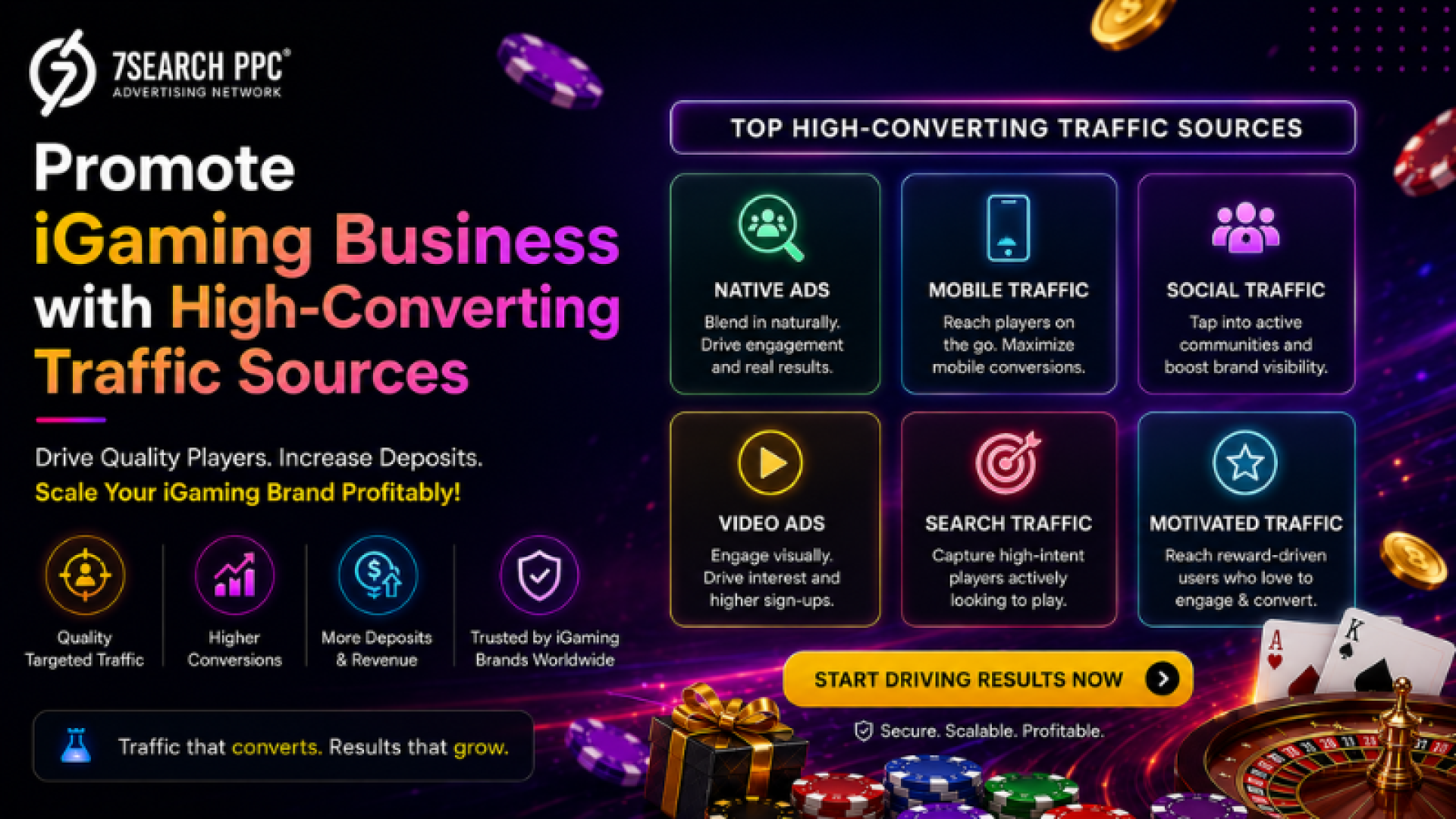
Most iGaming campaigns do not fail because of low traffic volume. They fail because the traffic source, audience intent, and conversion funnel are misaligned from the start. In competitive acquisition environments, operators often spend aggressively on clicks that never translate into deposits, retention, or sustainable player value.
That is why advertisers trying to Promote iGaming Business campaigns online are increasingly shifting attention away from vanity metrics and toward conversion quality. Registration spikes alone no longer indicate campaign success. What matters is whether traffic reaches deposit intent without collapsing under moderation pressure, creative fatigue, or poor post-click engagement.
Across regulated and semi-regulated gambling advertisement ecosystems, platform like 7SearchPPC are often used by advertisers looking for alternative traffic environments where campaign testing, audience filtering, and cost control can be managed more flexibly. This is especially relevant in mobile-heavy regions where CPC inflation and mainstream ad restrictions continue tightening.
The challenge is no longer simply getting visibility. The real challenge is identifying traffic sources capable of producing scalable acquisition without destroying ROI once campaigns begin expanding.
What Actually Drives High-Converting iGaming Traffic?
To successfully Promote iGaming Business Online, advertisers need traffic sources that balance conversion intent, compliance stability, and acquisition cost efficiency. High-performing campaigns usually rely on a mix of search intent traffic, affiliate ecosystems, retargeting layers, and performance-focused ad networks rather than depending entirely on one channel.
Why Most iGaming Traffic Campaigns Underperform
One recurring issue in online gambling promotion is that advertisers optimize too early for cheap acquisition instead of qualified acquisition. Lower CPC traffic often appears profitable at first because registration numbers increase quickly. However, once campaigns scale, weak player quality becomes visible through low deposit rates, short retention cycles, and inflated CPA volatility.
Many operators also underestimate how dramatically user intent changes between traffic sources. A sportsbook user entering through IPL-related search behavior behaves differently from a bonus-driven social click. Similarly, casino audiences responding to sweepstakes-style creatives often convert differently than users arriving from affiliate comparison environments.
This is where many campaigns break operationally:
- Traffic volume increases faster than conversion quality
- Creative messaging attracts low-intent users
- Broad targeting damages deposit efficiency
- Cheap inventory introduces bot-heavy or disengaged sessions
- Compliance-safe ads reduce click quality when messaging becomes overly generic
In most campaigns, the problem usually is not traffic alone. It is traffic-source suitability combined with funnel mismatch.
Key Factors Behind High-Converting iGaming Traffic
High-converting traffic sources typically share three characteristics:
- Strong behavioral intent
- Consistent post-click engagement
- Stable acquisition economics during scale
Advertisers working with network such as 7SearchPPC often notice that performance improves when traffic filtering is prioritized early rather than after scaling begins. Campaigns become easier to optimize when operators identify which audiences are actually progressing toward deposit behavior instead of only completing registrations.
Conversion quality in iGaming is rarely accidental. It usually comes from matching the right traffic environment with the right funnel expectation.
The Difference Between Volume Traffic and Intent Traffic
Many operators trying to boost iGaming business growth online assume scale comes from maximizing impressions. In practice, scalable campaigns usually come from narrowing intent signals.
Intent traffic behaves differently because users already demonstrate commercial curiosity before the click occurs. Search-led users, betting comparison audiences, odds-focused visitors, and returning affiliate audiences often produce stronger downstream metrics than broad entertainment traffic.
For example:
- Users searching betting strategies often show stronger sportsbook engagement
- Casino comparison traffic may produce higher first-time deposits
- Bonus-only traffic may inflate registrations while reducing retention
- Event-driven sports traffic spikes temporarily but becomes expensive during major tournaments
During IPL or football-season demand spikes, advertisers often increase bids aggressively without adjusting qualification layers. This creates acquisition distortion where traffic costs rise faster than deposit value.
At lower budgets this can remain hidden, but at scale, weak-intent traffic becomes financially damaging.
Traffic Sources That Commonly Perform Well for iGaming Operators
Not every acquisition channel behaves equally inside gambling and sportsbook markets. Some environments generate clicks efficiently but struggle under compliance pressure. Others provide stronger conversion quality but scale slowly.
Affiliate Ecosystems
Affiliate-driven traffic continues to remain valuable because users arriving through comparison, review, and strategy content often demonstrate higher commercial intent. Operators looking to increase traffic for iGaming affiliate usually focus on improving content alignment, offer transparency, and GEO-specific funnel localization rather than simply expanding publisher volume.
Affiliate environments also tend to produce better-informed users, which can reduce bounce rates after landing-page entry.
Performance-Focused Ad Networks
Alternative acquisition environments have become increasingly important as mainstream moderation systems tighten restrictions around gambling creatives. Some advertisers now diversify budgets into performance-based ad networks for iGaming to maintain testing flexibility while managing campaign segmentation more precisely.
In these ecosystems, operators often gain access to inventory types that support gambling advertisement campaigns without forcing overly restrictive creative standardization.
Search-Led Intent Traffic
Search traffic generally converts better when campaigns target transactional or strategy-oriented keywords rather than purely curiosity-driven queries. Users searching odds, betting apps, sportsbook comparisons, or live wagering information frequently display stronger deposit potential than broad entertainment audiences.
However, CPC pressure in competitive GEOs can become aggressive very quickly, especially during sports-driven seasonal periods.
What Advertisers Often Get Wrong About “Cheap” Traffic
Low-cost traffic is not automatically bad. But cheap traffic without behavioral filtering usually becomes operationally expensive later.
One of the most common scaling mistakes in online iGaming promotion campaigns is assuming lower CPM inventory improves profitability automatically. In reality, lower-cost traffic often introduces:
- Higher bounce rates
- Shorter session duration
- Lower payment completion rates
- Weak retention behavior
- Higher fraud exposure
When traffic gets cheaper, quality often drops in parallel unless campaigns apply filtering logic aggressively.
Experienced media buyers typically monitor:
- Deposit-to-registration ratio
- Session depth
- Repeat login behavior
- Time-to-deposit patterns
- Device-specific engagement quality
Surface-level metrics alone rarely reveal whether a campaign is genuinely scalable.
Which Traffic Sources Usually Convert Best?
Traffic sources with existing betting or casino intent generally outperform broad-interest audiences. Search-led acquisition, affiliate partnerships, contextual gambling advertisement placements, and retargeting-based funnels usually produce stronger deposit efficiency than untargeted display volume campaigns.
Why Funnel Structure Matters More Than Traffic Alone
Many operators focus heavily on acquisition while underestimating how much conversion quality depends on post-click architecture.
A strong traffic source cannot compensate for:
- Slow mobile landing pages
- Confusing registration flows
- Poor bonus explanation
- Weak payment trust signals
- Aggressive form friction
In mobile-first markets like India, even small UX inefficiencies can dramatically affect deposit completion rates. Advertisers often see acceptable CTR performance while losing users between registration and payment verification.
This becomes especially visible during high-volume sports periods where user patience declines and competition increases simultaneously.
Many operators attempting to grow iGaming business online concentrate too heavily on top-of-funnel acquisition while ignoring post-click conversion economics.
Compliance Pressure Is Reshaping Traffic Strategy
Compliance sensitivity has become a major operational factor in gambling acquisition. Ad approvals, creative moderation, and regional restrictions now directly affect campaign scalability.
Across Indian traffic environments and several international markets, advertisers increasingly encounter:
- Creative review delays
- Restricted wording policies
- Landing-page scrutiny
- Account-level moderation volatility
- Limitations around aggressive promotional claims
As a result, many operators are moving toward softer messaging frameworks built around sports engagement, gameplay experience, or platform usability rather than overtly aggressive bonus positioning.
Campaign stability increasingly depends on moderation-safe execution as much as raw acquisition skill.
Audience Segmentation Usually Determines Long-Term ROI
Not all depositing users carry equal value. One of the biggest mistakes advertisers make is treating all conversions as operationally identical.
In practice:
- Sportsbook users may demonstrate seasonal engagement spikes
- Casino users often respond more strongly to retention systems
- Fantasy audiences may behave differently from real-money betting audiences
- High-bonus users may produce lower long-term value
Experienced acquisition teams usually segment aggressively by:
- Device type
- Traffic source behavior
- Deposit velocity
- Session recurrence
- Payment completion behavior
- Regional engagement patterns
The goal is not merely acquiring users. It is acquiring commercially sustainable users.
How Should Operators Scale iGaming Traffic?
Operators should scale gradually by validating traffic quality before increasing spend aggressively. Campaigns that scale successfully usually expand only after confirming stable deposit behavior, acceptable retention signals, and moderation-safe creative performance across multiple audience segments.
The Most Sustainable Growth Usually Comes From Mixed Traffic Ecosystems
Overdependence on a single traffic source creates operational instability. CPC spikes, approval shifts, algorithm volatility, or seasonal competition can disrupt acquisition performance very quickly.
That is why mature operators usually combine multiple acquisition layers:
- Affiliate partnerships
- Search-led intent traffic
- Retargeting environments
- Contextual display inventory
- Performance-oriented ad platforms
Platform like 7SearchPPC are often part of this broader ecosystem rather than functioning as a standalone solution. Advertisers frequently use these environments to test campaign behavior, diversify traffic exposure, or access alternative inventory during periods of moderation tightening.
Long-term sustainability in iGaming acquisition rarely comes from one “perfect” source. It comes from building resilient traffic systems capable of maintaining conversion quality even when market conditions shift.
Final Thoughts
To effectively promote an iGaming business online today, operators need more than traffic volume. They need commercially aligned traffic sources capable of supporting real conversion behavior under competitive and compliance-sensitive conditions.
The campaigns that scale most reliably are usually the ones built around audience intent, funnel efficiency, traffic qualification, and operational discipline rather than short-term acquisition spikes.
In modern iGaming acquisition, quality almost always scales better than volume.
Frequently Asked Questions (FAQs)
Which traffic source is usually best for promoting an iGaming business online?
Ans. Search-led traffic, affiliate ecosystems, and performance-focused gambling advertisement networks generally produce stronger conversion intent because users already show betting or casino-related interest before entering the funnel. However, actual performance depends heavily on targeting quality, GEO behavior, and post-click funnel optimization.
Why do many iGaming campaigns generate registrations but low deposits?
Ans. This usually happens when campaigns optimize for low-cost traffic instead of deposit intent. Broad targeting, bonus-heavy creatives, weak landing-page trust signals, and poor audience filtering often attract users who register quickly but never progress toward meaningful engagement or payment completion.
How important is mobile traffic in modern iGaming advertising?
Ans. Mobile traffic has become critical, especially across India and other mobile-first markets where sportsbook and casino users primarily engage through smartphones. Campaigns that fail to optimize mobile loading speed, registration flow, and payment usability often experience significant conversion drop-offs.
Can low-cost traffic still work for iGaming operators?
Ans. Yes, but only when traffic quality controls are implemented properly. Cheap traffic without behavioral filtering often produces weak retention, lower deposit rates, and inflated CPA volatility during scale. Sustainable acquisition usually requires balancing cost efficiency with user intent quality.
Why do operators use multiple traffic sources instead of one platform?
Ans. Relying entirely on one acquisition source creates operational risk. CPC spikes, moderation changes, seasonal competition, or inventory volatility can quickly affect campaign performance. Most scalable iGaming operators diversify across affiliate traffic, search intent campaigns, retargeting environments, and alternative ad ecosystems to maintain stable acquisition performance.