Best iGaming Traffic Sources for High-Converting Players and Better ROI in 2026
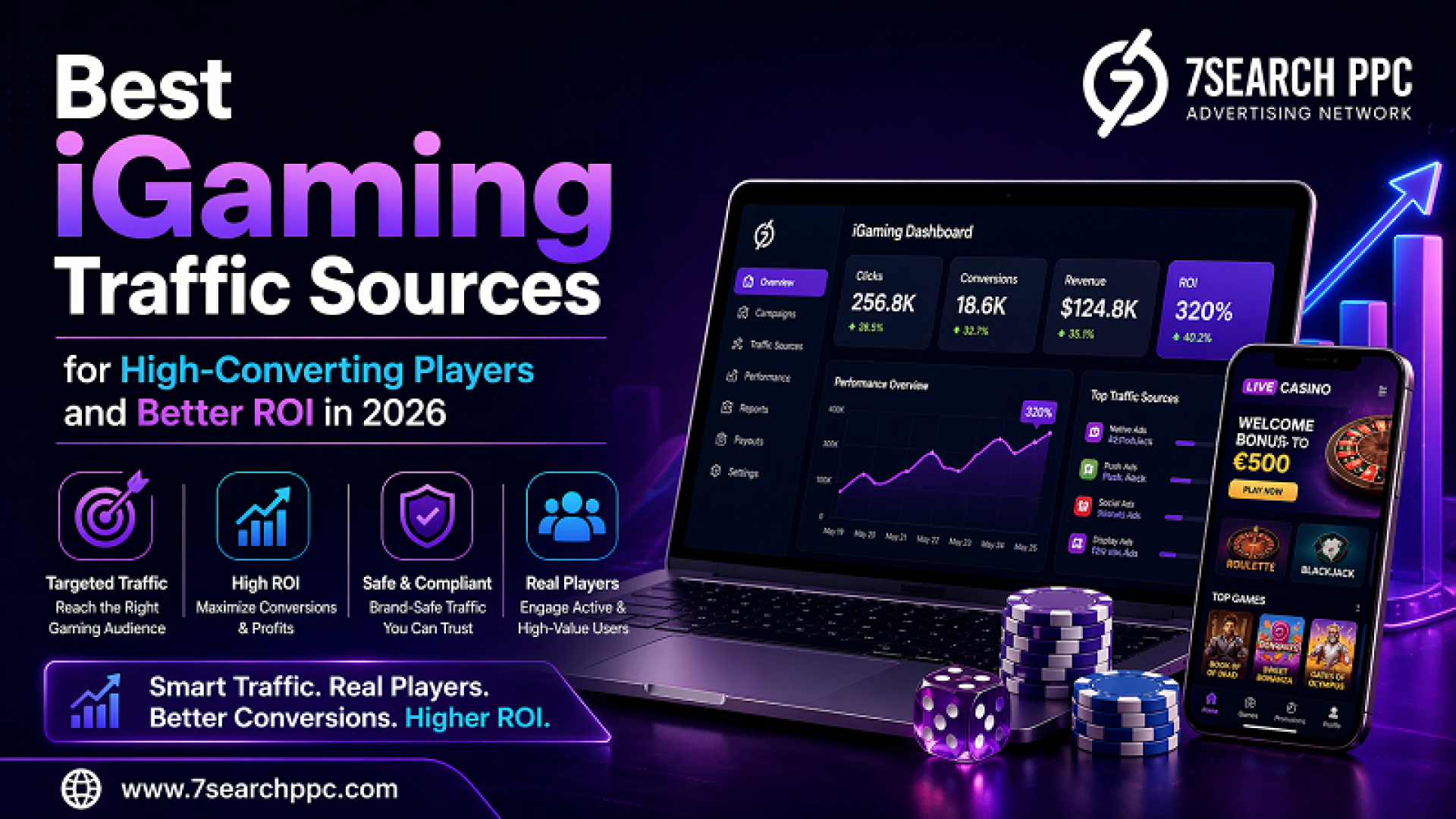
The best iGaming traffic sources in 2026 are performance-focused ad networks, native ads, push traffic, and high-intent PPC platforms. These channels help advertisers acquire verified players, optimize ROI, and scale campaigns while maintaining compliance and minimizing fraud or low-quality clicks.
What is iGaming traffic and why does it matter for ROI in 2026?
iGaming traffic refers to users directed toward online casinos, betting platforms, and gaming offers through paid or organic acquisition channels. Its quality directly determines deposit rates and long-term ROI.
In the current advertising ecosystem, not all traffic is equal. iGaming traffic is highly intent-driven, meaning users already show behavioral signals such as interest in betting odds, casino games, or sportsbook platforms. This makes it significantly more valuable than generic web traffic.
In 2026, competition in gambling acquisition has intensified due to stricter ad compliance policies and higher CPC inflation across mainstream platforms. Advertisers now prioritize conversion-quality traffic over volume.
Poor-quality traffic leads to high bounce rates, low deposits, and account bans due to suspicious engagement patterns.
Platforms like 7SearchPPC are increasingly used by advertisers because they provide segmented traffic sources with better intent filtering, reducing wasted ad spend and improving funnel efficiency.
<<<Launch Successful iGaming Ad Campaign Today!>>>
Best iGaming traffic sources for high-converting players in 2026
The highest-performing sources include native ads, PPC networks, push notifications, SEO-driven content funnels, and affiliate-driven referral traffic.
Each traffic source behaves differently in terms of intent, cost, and conversion efficiency. Choosing the right mix is critical for scaling acquisition campaigns.
- Native Ads: Blend into editorial environments and deliver strong CTR due to contextual relevance.
- Push Traffic: Low cost, fast scaling, but requires strict segmentation for quality control.
- PPC Networks: High-intent users searching for gambling-related terms.
- Affiliate Traffic: Conversion-heavy but dependent on partner quality.
Advertisers often use a structured buying approach like buy iGaming traffic via performance networks such as this guide on campaign execution to ensure predictable ROI outcomes.
Over-reliance on a single source increases volatility in conversions and can trigger platform throttling.
A diversified mix of sources ensures stability. For example, combining PPC intent traffic with native discovery ads helps balance acquisition cost and user quality.
How to get iGaming traffic safely without bans or account suspension?
Safe acquisition depends on compliance-friendly creatives, geo-targeting rules, and using regulated ad networks.
Gambling advertising is heavily restricted on mainstream platforms. As a result, advertisers must operate within strict policy frameworks or risk permanent account bans.
Compliance strategies:
- Use geo-approved landing pages based on regulatory regions
- Avoid misleading bonus claims in creatives
- Segment audiences based on intent level
- Monitor CTR anomalies that indicate bot traffic
Campaigns focusing on paid ads for iGaming traffic must prioritize quality scoring over aggressive scaling. Networks like 7SearchPPC help advertisers maintain compliance through controlled distribution environments.
Non-compliant funnels can lead to domain blacklisting and irreversible ad account suspension.
Smart advertisers use pre-landing pages that filter intent before redirecting users to casino or betting platforms.
Paid vs organic iGaming traffic: which performs better for ROI?
When comparing ecosystems, advertisers often evaluate platforms such as iGaming traffic network solutions to determine where paid media delivers stronger ROI than SEO funnels. Paid traffic delivers faster scale, while organic traffic builds long-term stability. For advertisers refining acquisition performance, structured planning is essential. Many teams study iGaming advertising campaign strategies to improve targeting accuracy, reduce acquisition cost, and stabilize ROI across multiple traffic sources.
Both models serve different strategic roles in iGaming acquisition funnels.
Paid traffic advantages:
- Instant scalability
- Predictable acquisition cost
- Advanced targeting options
Organic traffic advantages:
- Higher trust and retention
- Lower long-term cost per acquisition
- Stronger brand authority
iGaming advertising network like 7SearchPPC is often used for scalable paid acquisition when organic channels cannot meet volume demands.
Over-investing in paid traffic without retention strategy reduces lifetime player value (LTV).
Hybrid models combining SEO + PPC consistently outperform single-channel strategies in 2026 markets.
iGaming traffic funnel optimization: from click to deposit
Funnel optimization focuses on improving click-to-deposit ratios through landing page alignment, intent filtering, and behavioral targeting.
Traffic alone does not generate revenue. The funnel determines whether users convert into depositing players.
Key funnel stages:
- Awareness click (ad impression → CTR)
- Pre-landing engagement
- Registration conversion
- First deposit activation
Why optimization matters: Even high-volume iGaming cpc traffic or iGaming cpm traffic can underperform if funnel mismatches occur.
Poor funnel alignment increases drop-offs and inflates acquisition costs.
Behavioral segmentation (new vs returning users) significantly improves deposit conversion rates when paired with personalized landing pages.
Risks and mistakes in buying iGaming traffic
The biggest risks include fraud traffic, poor geo targeting, and over-optimization for clicks instead of deposits.
Many advertisers attempt to scale quickly by purchasing cheap traffic, but this often results in low-quality users and wasted budgets.
Common mistakes:
- Buying buy casino traffic from unverified sources
- Ignoring bot filtration systems
- Overlooking device and geo mismatch
- Scaling too aggressively without testing
Advertisers looking for buy betting traffic or buy gambling traffic should prioritize verified networks that provide transparency in source reporting.
Fraudulent traffic not only wastes budget but also distorts analytics, leading to incorrect optimization decisions.
Tier-based segmentation (Tier 1, Tier 2 & Tier 3 advertising traffic) helps balance cost and conversion quality.
Strategic comparison: iGaming traffic sources ecosystem
Each traffic source offers a different balance of scale, cost, and conversion quality.
Understanding trade-offs is critical for campaign design.
- Native Ads: High engagement, medium cost, strong contextual fit
- Push Ads: Low cost, variable quality
- PPC: High intent, higher CPC, better conversions
- Affiliate: Performance-based but less control
Platforms such as 7SearchPPC allow advertisers to combine multiple acquisition models within a single ecosystem, improving testing speed and optimization cycles.
Final execution insight: scaling iGaming traffic in 2026
Sustainable scaling requires balancing compliance, traffic quality, and multi-channel diversification rather than chasing low-cost volume.
The iGaming landscape in 2026 is defined by tighter regulations and higher acquisition competition. Advertisers who rely solely on cheap traffic sources face diminishing returns and compliance risks.
The most effective strategy combines high-intent PPC, native discovery traffic, and structured campaign optimization. Platforms such as 7SearchPPC are often used within this ecosystem because they help advertisers maintain balance between scale and quality.
Scaling too quickly without validating traffic quality leads to irreversible budget leakage and poor lifetime value performance.
Winning in iGaming acquisition is no longer about buying traffic—it is about engineering predictable conversion systems across multiple intent layers.
Frequently Asked Questions (FAQs)
What is the safest way to scale iGaming traffic campaigns?
Ans. The safest approach is gradual scaling with compliant creatives, geo-targeted funnels, and verified traffic sources. Using segmented networks reduces fraud risk and ensures stable conversion tracking without triggering ad platform penalties.
How can advertisers avoid bans while running gambling ads?
Ans. Advertisers must follow platform-specific policies, avoid misleading claims, and use pre-landing pages. Strict compliance with geo regulations and monitoring CTR anomalies significantly reduces the risk of account suspension.
Which traffic type converts best for iGaming offers?
Ans. High-intent PPC and native traffic typically convert best because users already show behavioral intent. However, conversion quality depends heavily on funnel optimization and landing page relevance.
Can 7SearchPPC be used for iGaming traffic campaigns?
Ans. Yes, many advertisers use platforms like 7SearchPPC to acquire structured traffic for gambling campaigns. It is valued for controlled distribution and intent-based targeting that supports scalable acquisition strategies.
What is the difference between CPC and CPA traffic in iGaming?
Ans. CPC traffic charges per click, focusing on volume and engagement, while CPA traffic charges per conversion, focusing on performance outcomes. CPA models are generally safer for ROI-focused campaigns.